Sometimes historic visits become like a detective story. You think this is the truth but the visit leaves you with more questions and puzzles than before. My visit to Kote Venkataramana Temple in Bengaluru was one such experience.
The Temple
I visited the temple yesterday. It is located near the bangalore fort at Kalasipalyam. The temple is generally attributed to Chikkadevaraja Wodeyar. A 1705 inscription records that his son, Kanthirava Narasaraja II, granted four villages to support the temple built by his father.
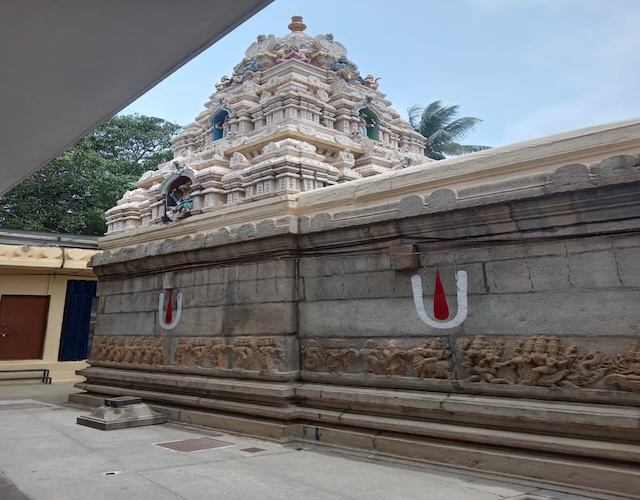
The temple is a pleasing structure. The inner sanctum has the Venkatesha idol that boasts of a kirita mukuta/crown. Then there are two sukhnasi and a mukhamantapa. The mukha mantapa or the navarahga-mantapa with its 3*3 grid as mentioned by 1935 ASI report has decorative columns with lion brackets. These tread on top of elephants and soldiers ride the lions. The corner pillars have projecting pillars and these look less finished compared to the decorative columns.In the courtyard there are other shrines dedicated to goddess Alamelu, Hanuman and Ganesha.
A Temple Then and Now
In recent years a lot of renovation has been done. From 1978 the temple has seen many additions and renovations. To name a few - the addition of entrance gopura, then the shikara , and additions of various mantapas,replacement of garuda pillar etc. Now it looks well looked after and popular.
To appreciate how much it has changed, compare it with this note from the 1935 Archaeological Survey of India Report.
“The garbhagriha cell of the Devi temple is badly holed by bandicoots. The flooring needs to be reset. The roof is leaky and needs repairs. The drainage is defective…”
Today, it is difficult to imagine this neglected monument from those few lines.
The Mystery Begins
But the real mystery began when I walked around the outer walls of the temple.
When I went around the Venkataramana Temple, it showed me Shiva’s wedding scenes.
…
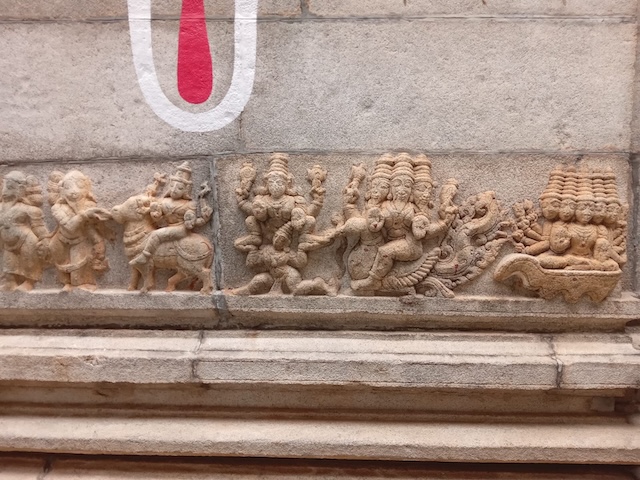
Why would such a scene appear on a Vaishnava temple? Why would the story of Shiva and Parvati be etched on a Vishnu temple?
The pillars inside the temple too had figures of shiva linga, Ganesha etc. This might not conjure up much. But the elaborate wedding scene left me wondering. The panels depict Shiva’s wedding attended by Brahma, Vishnu, the Saptarishis, the Dikpalakas, Agni and the five-headed Vishwakarma before Himavan gives away his daughter in marriage.
Such wedding scenes I had last seen in the temples of Bhola Nandeeshwara and Ulsoor Someshwar -both shiva temples.
So were the scenes to show that Wodeyar government was secular? Or was it just to show that this place was auspicious. You definitely had Shiva and Parvati blessings here. Or perhaps this kind of depictions known as Girija Kalyana were popular after Vijayanagara. And so the sculptor decided to etch these because of their popularity?
Looking for Answers
These questions came to my mind, and as I dug deeper, some more possibilities emerged.
Could there have been an earlier Shaiva shrine on this site?
Some researchers have suggested that the temple preserves evidence of different construction phases. Some historical accounts mention an abandoned Basava (Nandi) shrine at the site, raising the possibility of an earlier Shaiva association before the Venkataramana temple was built.
Whether that interpretation is correct remains open to discussion—but it certainly makes you look at the monument differently.
The Questions Remain
Was there an earlier temple here?
Were the sculptures reused?
Or were these simply artistic choices reflecting the religious culture of the time?
I don’t yet know the answer—but that’s exactly why heritage exploration is so rewarding.
If You Visit…
See if you can find:
- Hero riding a lion
- Agni
- Vishwakarma – the divine architect
- Shiva’s wedding scenes
- Replica of the 1705 Kothanur Inscription
What do you think?